The Rines Flipper Photographs: Evidence, Enhancement and Influence
What the flipper photographs are
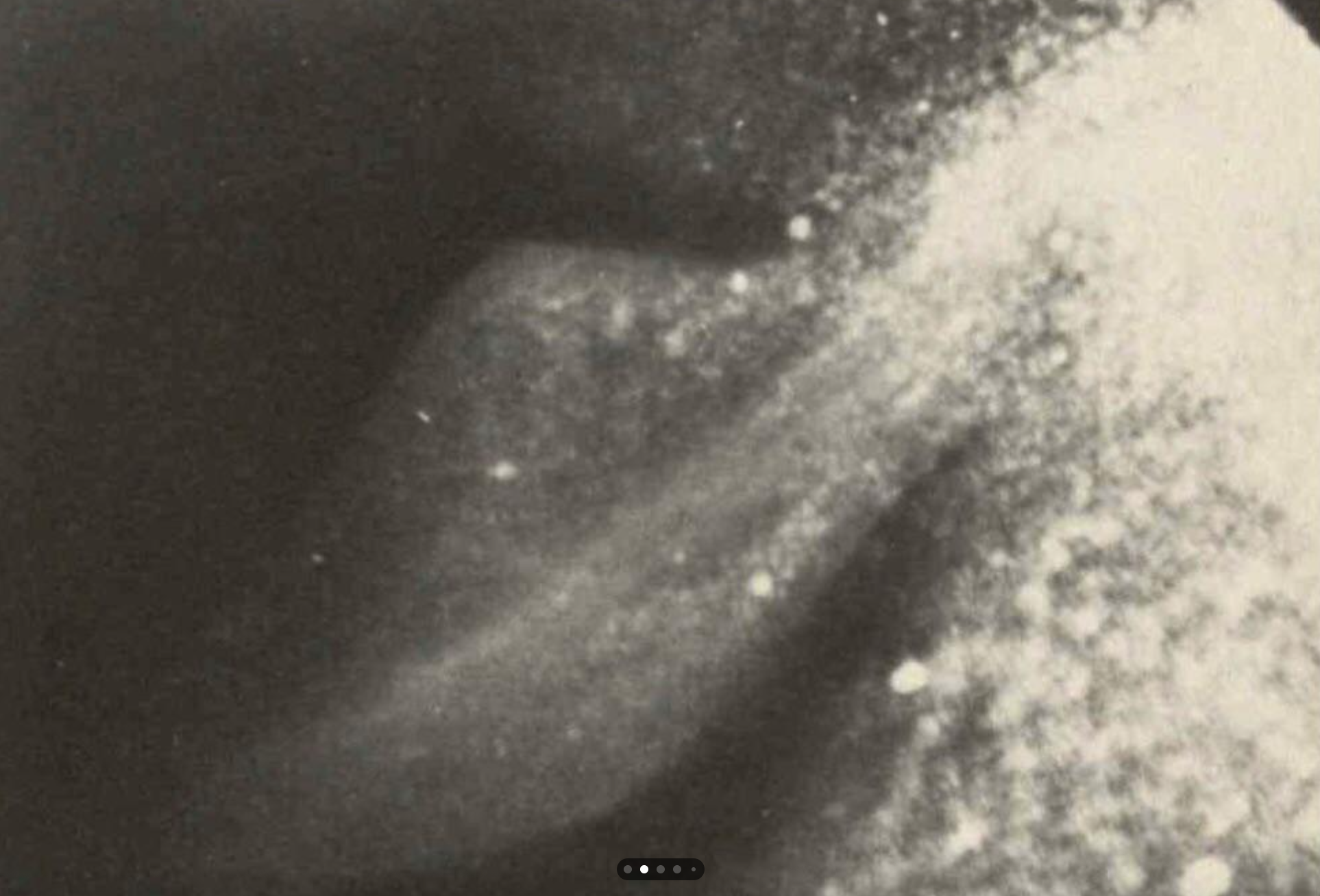
The flipper photographs are two underwater frames exposed in Urquhart Bay in the early hours of 8 August 1972. The camera belonged to the Academy of Applied Science (AAS), a private American body led by the patent lawyer Robert Rines. In their published form the frames show a diamond-shaped paddle joined to a rough-textured body.
For a decade they were treated as the best physical evidence from Loch Ness. In December 1975 Rines and Sir Peter Scott used them in Nature to give the animal a scientific name, Nessiteras rhombopteryx. In 1984 two American engineers reported that the published pictures did not match the computer-enhanced versions kept by the laboratory that had done the enhancing.
That leaves three separate questions. What did the camera record? Who turned the record into a flipper? Did Rines know? This post sets out the people, the equipment, the case on each side, and the circle of believers Rines moved in at the loch. It does not reach a verdict on Rines himself, because the documents that would settle it have never been produced.
Robert Rines and the Academy of Applied Science
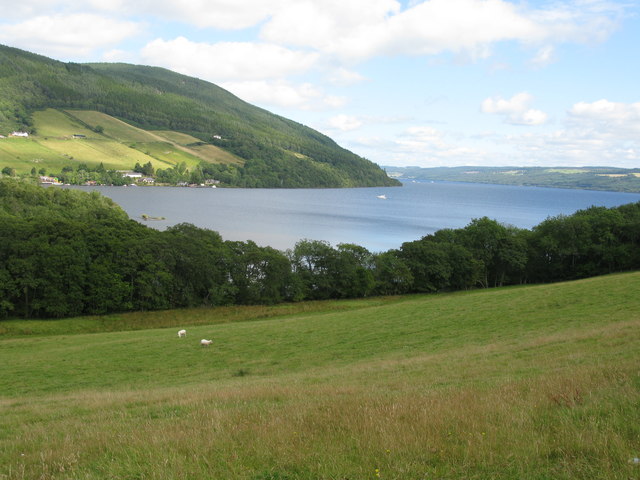
Rines was a Boston patent attorney with an MIT background in sonar and radar, more than 100 patents, and a place in the National Inventors Hall of Fame. He taught at MIT, founded the Franklin Pierce Law Center in 1973, and wrote music for the stage (Boston Magazine). He died in 2009.
He was not a career scientist. His doctorate came in 1972 from Chiao Tung University in Taiwan (Coleman obituary), and later critics accused him of presenting his credentials as weightier than they were (Naish 2020). The AAS was his own foundation, not a learned society, although it drew on serious MIT talent.
Two things brought him to the loch. In the late 1950s he read Constance Whyte's More Than a Legend at Fort Augustus and posted a copy to Harold Edgerton (Boston Magazine). In 1969 he heard Roy Mackal of the Loch Ness Investigation Bureau (LNIB) speak, and offered the Academy's help. His first season was 1970, when he tried scent lures and Martin Klein ran side-scan sonar off Temple Pier.
Then he had a sighting of his own. With his wife Carol he watched a hump in Urquhart Bay from the home of Basil and Winifred Cary. The sources do not agree on the date: Loren Coleman gives 23 June 1971, the New Yorker and Boston Magazine give 23 June 1972, and Roland Watson gives August 1971. If 1972 is right, the sighting came about six weeks before the flipper frames. Either way, Rines was a convinced eyewitness before the film was developed.
The players
The 1972 work was a joint AAS and LNIB operation. The Americans supplied the camera and the interpretation; the LNIB supplied boats, crew and local knowledge.
- Robert Rines — AAS president; led the expedition, took the film to the US, commissioned the enhancement, published the results
- Carol Rines — His wife; shared the Cary sighting and was at the loch in 1972
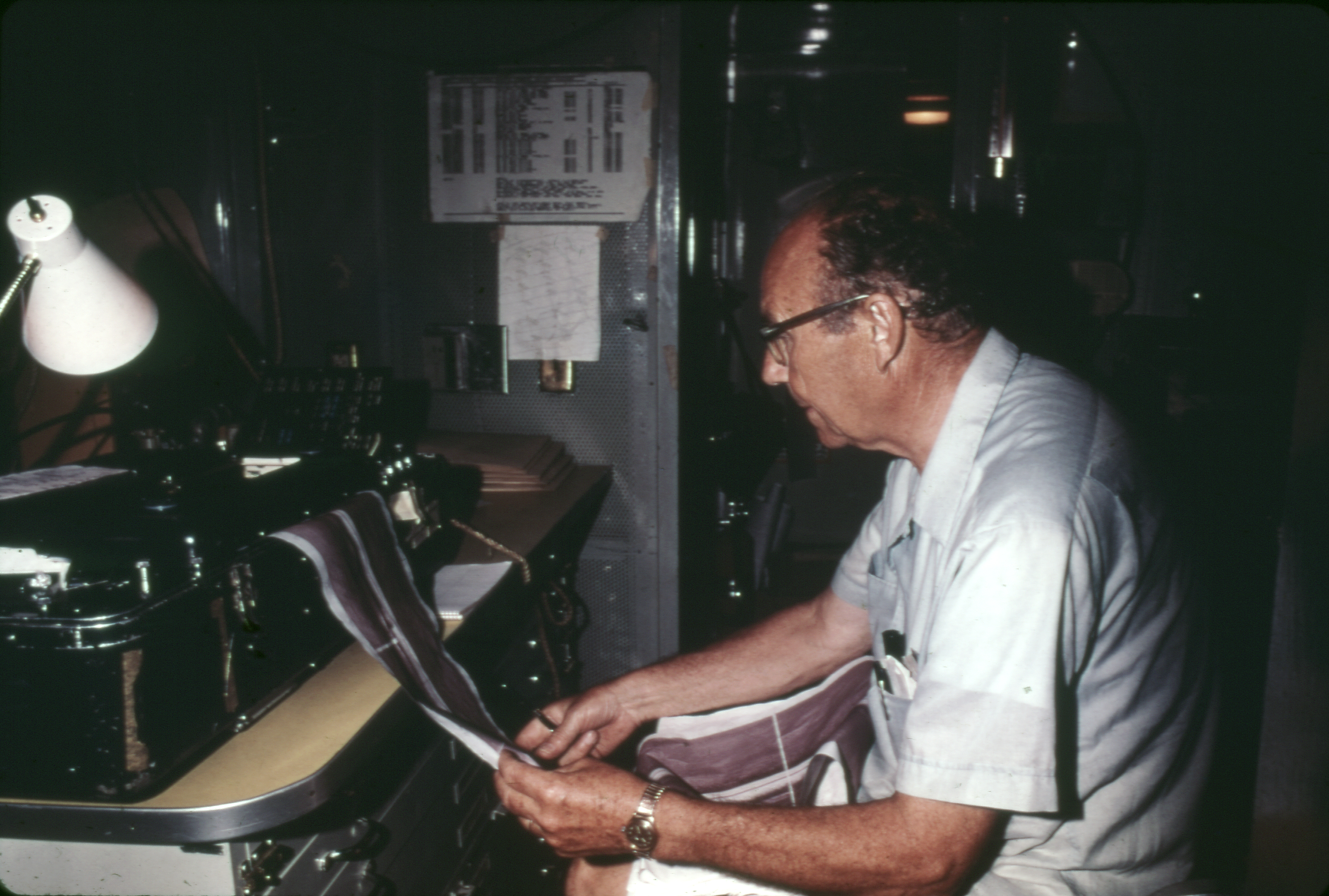
- Harold "Doc" Edgerton — MIT strobe and sonar pioneer; designed and supplied the camera and strobe. He declined to attend in 1972 and joined in person later. A sceptic by temperament
- Charles Wyckoff — Photographic scientist, Applied Photo Sciences; handled AAS film and prints, co-built the 1975 sonar-triggered rig, defended the pictures in 1984
- Martin Klein — Sonar designer, Klein Associates; ran side-scan in 1970 and later, and gave an opinion on the 1972 chart
- Isaac Blonder — Electronics manufacturer and AAS member who backed the expeditions (from the book literature; not checked online)
- Alan Gillespie — Junior engineer at the Jet Propulsion Laboratory (JPL); did the computer enhancement in August 1972
- Peter Davies — LNIB; skipper of the sonar boat Narwhal
- Dick Raynor — LNIB; aboard Narwhal that night. Later the main critic of the pictures
- Holly Arnold — LNIB; organised the logistics of the night, including the dowsing signals
- Ivor Newby, Gordon Menzies — Present and later witnesses to how the sonar transducer was hung
- Winifred and Basil Cary — Residents at Strone above Urquhart Bay; hosts to Rines; Winifred dowsed for the monster on the night
- Tim Dinsdale — Veteran monster hunter; ally of Rines, promoted the picture in 1973
- Sir Peter Scott — Naturalist and painter; co-author of the 1975 Nature paper and of the plesiosaur reconstruction
- Roy Mackal — Chicago biochemist and LNIB director; brought Rines in, later doubted the flipper's size
- Nicholas Witchell — Young LNIB volunteer and author of The Loch Ness Story; main narrative source for the night
- Rikki Razdan, Alan Kielar — Engineers who compared JPL's prints with the published ones in 1984
- Adrian Shine — Loch Ness Project; argued the frames show the loch bed, and said in 2001 the clean edges were added by hand
Sources for the table: Naish 2020, Razdan and Kielar 1984, MIT Technology Review 2007, Watson 2020.
The camera and sonar rigs
The 1972 camera was an Edgerton design: a 16mm time-lapse cine camera and a 50-watt strobe, each in its own cylindrical housing. It fired at a fixed interval, most likely every 45 seconds, although Dinsdale and Witchell wrote 15 and Mackal 55 (Naish 2020). It was not triggered by sonar. It simply ran, and exposed about 2,000 frames that night.
The unit hung beneath the boat Nan at about 13 metres. The sonar was a Raytheon DC 725 chart recorder on the LNIB boat Narwhal, moored roughly 36 metres away, with its beam meant to cover the water in front of the camera.
How the transducer was fixed matters. The AAS diagram showed it secured to the loch bed in about 10 metres of water. Arnold, Newby, Menzies and Raynor all said it hung free on a rope over the side of a boat (Razdan and Kielar 1984). Klein's opinion that the chart showed moving targets assumed a fixed transducer.
The sonar-triggered rig most people associate with Rines came later. Edgerton brought Wyckoff in to integrate strobe, camera and sonar for 1975, and the old 1972 unit was kept as a backup hung at about 40 feet (Watson 2021, Watson 2017). It was that backup unit, not the new rig, that took the 1975 "body" and "gargoyle head" frames.
So the division of labour in 1972 was this. Edgerton built the camera in Massachusetts and stayed away. LNIB volunteers moored the boats, hung the gear and watched the chart. Rines directed, and carried the film home.
The night of 7 to 8 August 1972
The boats were moored in Urquhart Bay off Temple Pier. The placing was not purely technical. Winifred Cary had dowsed with a pendulum from her house above the bay and reported two monsters near the river mouth. She passed this to the boats by flashing a headlamp in a code agreed beforehand, and Holly Arnold of the LNIB confirmed the arrangement (Razdan and Kielar 1984).
Between about 1.40 and 2.10 am the Raytheon chart on Narwhal drew heavy traces, which the crew read as large bodies moving through the beam with fish scattering ahead of them (Naish 2020). The Loch Ness Project gives 1.45 am for the flipper frame (Loch Ness Project). Razdan and Kielar date the event to 9 August at about 1 am, which looks like a slip.
Witchell's account has the crews coming ashore at dawn in high spirits with the chart roll. A dinghy was being rowed between the sonar boat and the camera boat during the contact period, which the critics later used to explain part of the trace.
The film went to the United States at once and was developed by Eastman Kodak under bond. Nobody has suggested the negative itself was tampered with. The argument is about what happened to the pictures afterwards.
From raw frames to flippers
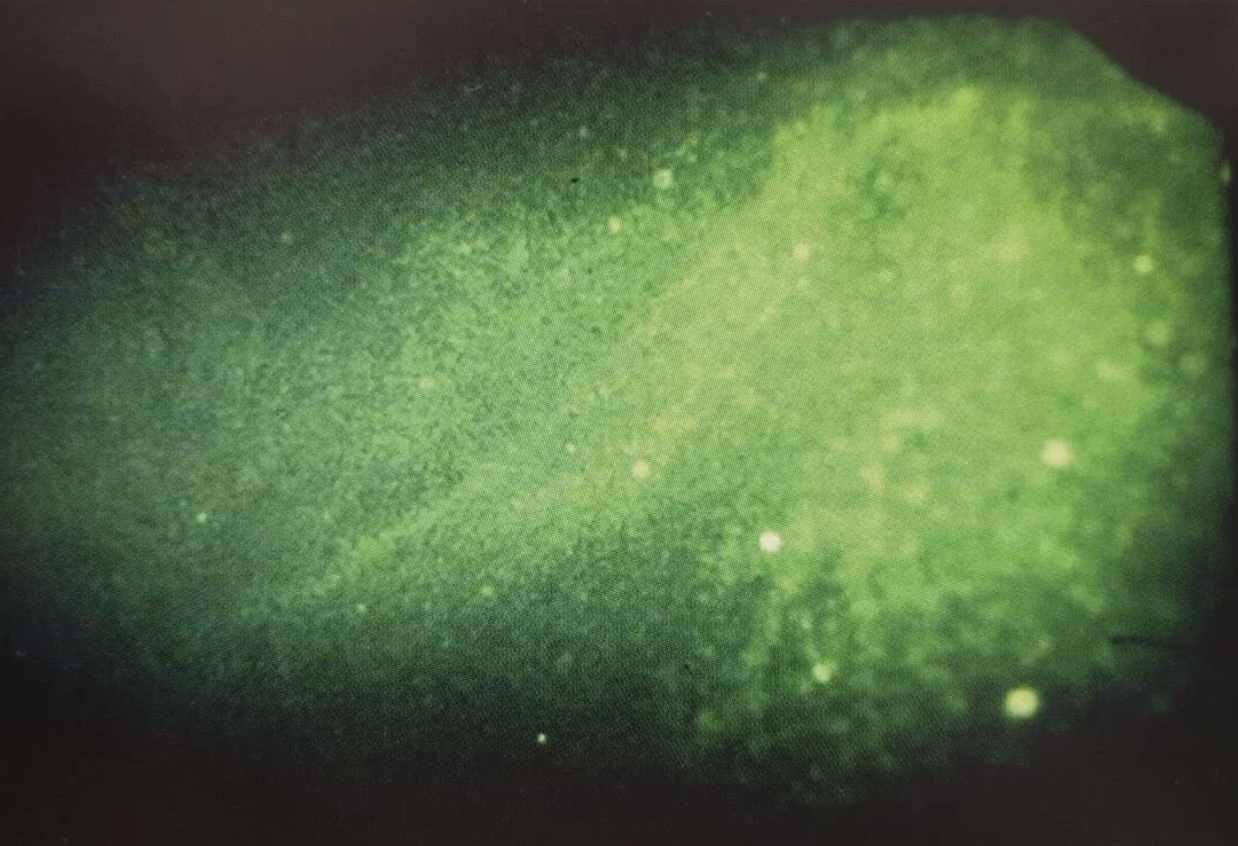
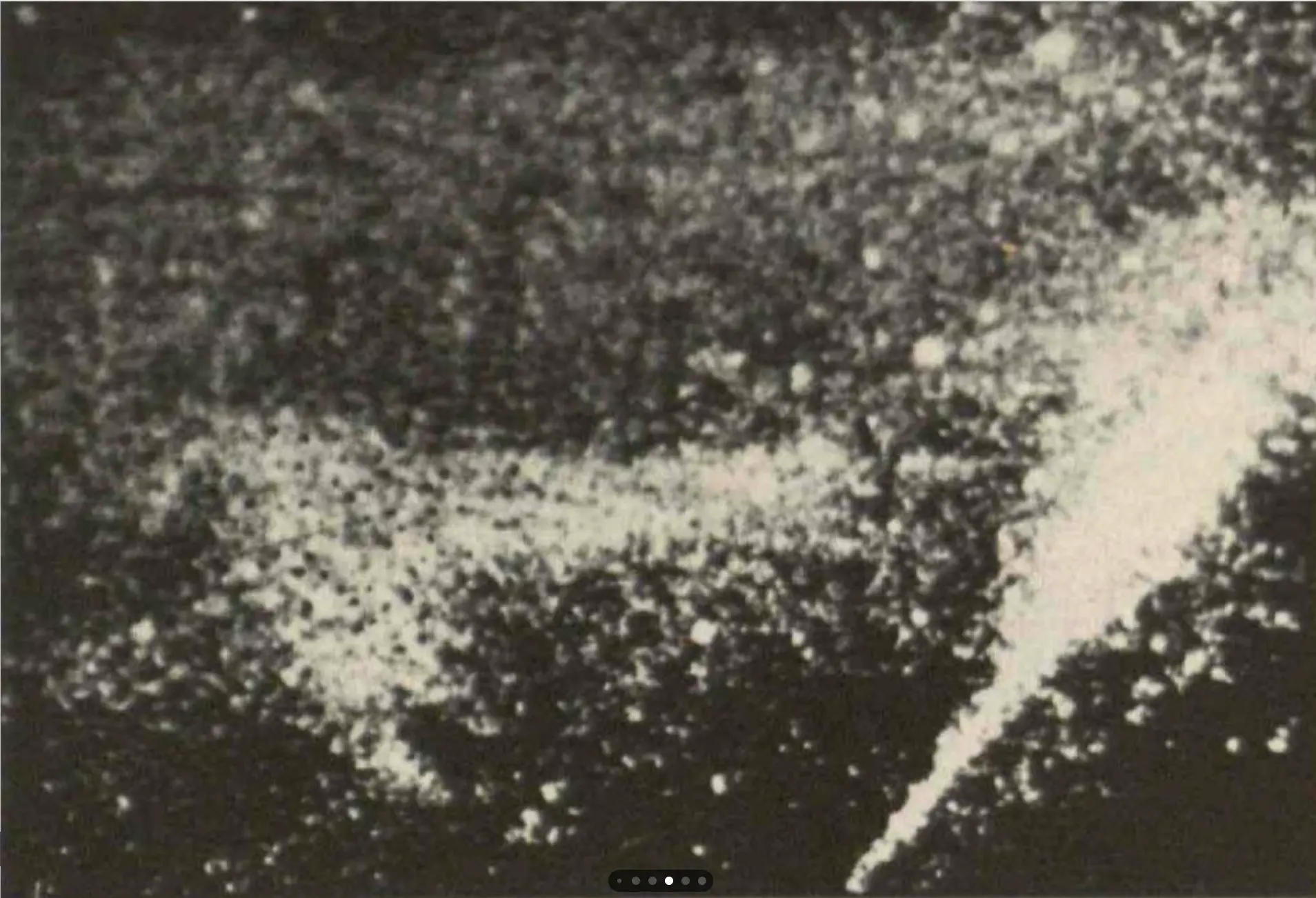
The developed frames showed very little: faint, greenish, low-contrast patches. Three were picked out. Two became the flippers; a third was said to show two hazy bodies, but its time was never tied to the sonar chart.
Rines sent the transparencies to JPL in Pasadena, where Alan Gillespie ran them through the image-processing routines used on spacecraft pictures. That was in August 1972. Gillespie's outputs are coarse, grainy shapes with no sharp boundary (Naish 2020).
The pictures released on 1 November 1972 are different. They have a clean rhomboid outline, a central rib, and no visible pixel structure. Raynor has pointed out that other computer-processed Loch Ness pictures of the period show their pixels plainly. He also received a clean-edged print from Rines in October 1972, before any newspaper or magazine had the material.
So somewhere between Pasadena in August and Rines's outgoing post in October, the picture changed. The published frames were also printed rotated; in the camera's true orientation they sit the other way up. The Loch Ness Project notes the same thing happened with the 1975 material, which looked better inverted (Loch Ness Project timeline).
Estimates of the flipper's size ran from 1.2 to 2.4 metres, resting on an assumed distance from the lens. Mackal, no sceptic, thought even the low end too big.
The case for the photographs
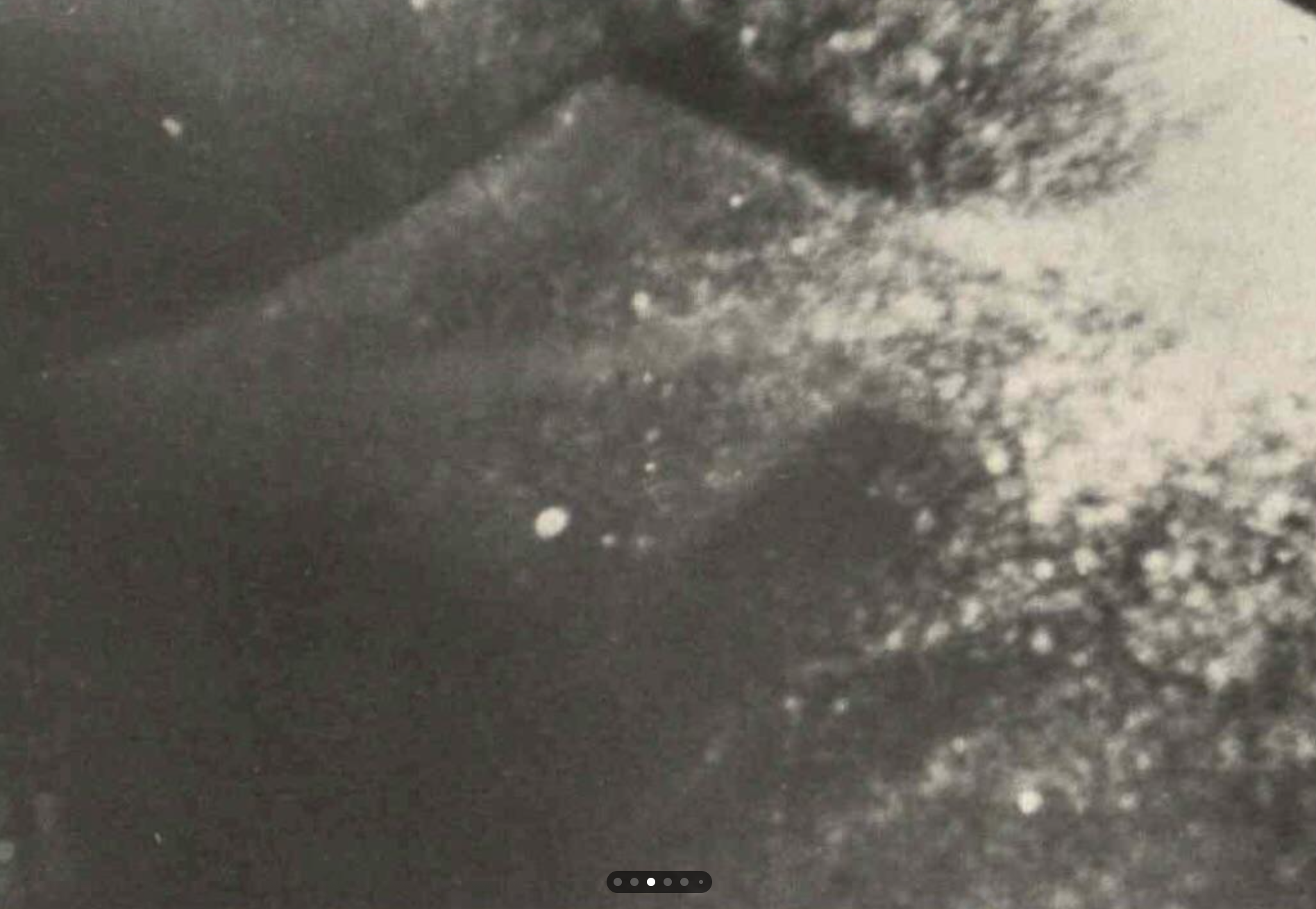
Two instruments agreed in time. The frames were exposed while an independent sonar, on another boat with another crew, was recording strong targets. Henry Bauer stresses that the chart also shows small fish echoes on straight escape paths (Bauer 2002).
- Two frames, two attitudes. The flipper shapes differ between exposures under a minute apart. Supporters read that as a limb in motion, or a front and a hind limb.
The shape is said to be in the raw film. Bauer reports that both Gillespie (1980) and Wyckoff (1984) stated the outline was visible before enhancement, and that Nigel Sitwell printed an unenhanced transparency in Wildlife in March 1976 (Bauer 2016).
- Wyckoff gave a non-fraudulent mechanism. He said the only manipulation was to superimpose transparencies that had been enhanced or filtered in different ways. A sandwich of that kind sharpens edges and hides pixels without a brush touching anything.
- The chain of custody was open. Kodak processed the film under bond and JPL kept its own copies. A man planning a forgery does not usually leave a control set with a NASA laboratory.
- Qualified people looked and were not embarrassed. George Zug of the Smithsonian described a flipper-like appendage on a robust body. Henry Lyman of the New England Aquarium and Peter Scott accepted it. Nature printed it.
- Rines had no obvious motive. He was wealthy, eminent in his own field, and spent his own money on the loch for another 35 years. Edgerton, whose name was worth more than Rines's, kept working with him.
The rebuttal was never answered in kind. Discover declined to print Wyckoff's letter of protest, according to Bauer, and Rines published a reply in Skeptical Inquirer in 1985. A contemporary summary judged the exchange inconclusive (Science Frontiers 1985).
The case against the photographs
- The published prints do not match JPL's. Razdan and Kielar obtained Gillespie's own enhanced copies in October 1983 and found that areas of the published versions had been significantly altered. Gillespie said the clean diamond was not his work.
- The surface looks painted. No pixel structure, hard edges, and shadow detail that Raynor says he can only explain as artwork. Shine said on television in 2001 that the outlines had been added by hand.
Modern processing cannot reproduce them. Attempts to get a flipper out of the raw frames with current software fail (Museum of Hoaxes).
- The camera was probably on the bottom. It hung at 13 metres over a shelving bed of about that depth, from a boat swinging on its mooring. Raynor, who was there, argues the frames show silt or a scrape made when the housing touched down. A drifting camera also explains why the shape differs between frames.
- The sonar does not support the picture. The transducer was swinging, not fixed. The camera and its cable do not appear on the chart where the AAS diagram says they should. Wakes and the rowing boat are available explanations. The chart's long axis is time, so the "body shapes" read off it are not outlines.
- The third frame floats free. It was never timed against the chart.
- The placement was set by a pendulum. The crew were told by a dowser that two animals were present before the chart drew anything.
The pattern repeated in 1975. The "gargoyle head" from the same camera was matched in 1987 to a tree stump on the bed of the bay, which Raynor recovered and which is now on display in Drumnadrochit (Loch Ness Centre).
- The anatomy never worked. The size estimates were too large for the body implied, and the Nature naming drew immediate criticism from Corbet, Halstead and others.
The weight of this falls on the published image, not on the film. Even the strongest version of the sceptical case says the camera recorded something real and dull, and that the flipper was made afterwards.
Who made the flipper, and did Rines know?
Nobody has ever been identified. Razdan and Kielar did not name anyone. Naish concludes the work was done on the AAS side, by hand, by a person or persons unknown. Gareth Williams, in A Monstrous Commotion, goes further and treats Rines as the faker, calling him an "unscrupulous opportunist" (quoted in Bauer 2016). Bauer rejects that outright.
One theory can be set aside. A magazine art department did not do it, because Rines posted a clean-edged print to Raynor in October 1972, before release. The altered image came out of the Academy.
That leaves four possibilities.
1. Rines did it, or ordered it, knowing it was misleading. For: he controlled the transparencies, he was a lawyer who understood evidence, he described the result as computer-enhanced, and he went on supplying clean-edged versions for decades after 1984. Against: he had sent the raw film to an outside laboratory that kept copies, which is the one step a deliberate forger would avoid.
2. Wyckoff or a darkroom technician built a composite and Rines took it at face value. Wyckoff was the photographic specialist and his 1984 letter describes exactly this kind of work. On this reading the diamond is a product of stacking, masking and copying, and whoever did it thought of it as clarification.
3. A hired illustrator or retoucher tidied a print for presentation, as was routine for press and lecture slides in 1972, and the tidied print displaced the original. Rines may or may not have asked what had been done.
4. Nothing was painted, and the differences from JPL's prints come from combining several enhancements. This is the Wyckoff and Bauer position. It has to explain away Gillespie's own statement and Shine's 2001 demonstration.
The evidence does not separate options 1 to 3. What can be said is narrower. Rines presented an image as the output of a NASA computer when it was not, and he did not correct the record when the discrepancy was shown to him. Whether that was deceit or conviction depends on what he believed he was looking at.
That is where his own sighting matters. A man who has watched a 25-foot hump from a friend's garden does not look at a blurred frame neutrally. If he already knew the animal was there, a print that showed it more clearly would seem more accurate, not less. That is not an excuse. It is a description of how an honest man can end up circulating a false picture.
Where Rines stayed, and who he kept company with
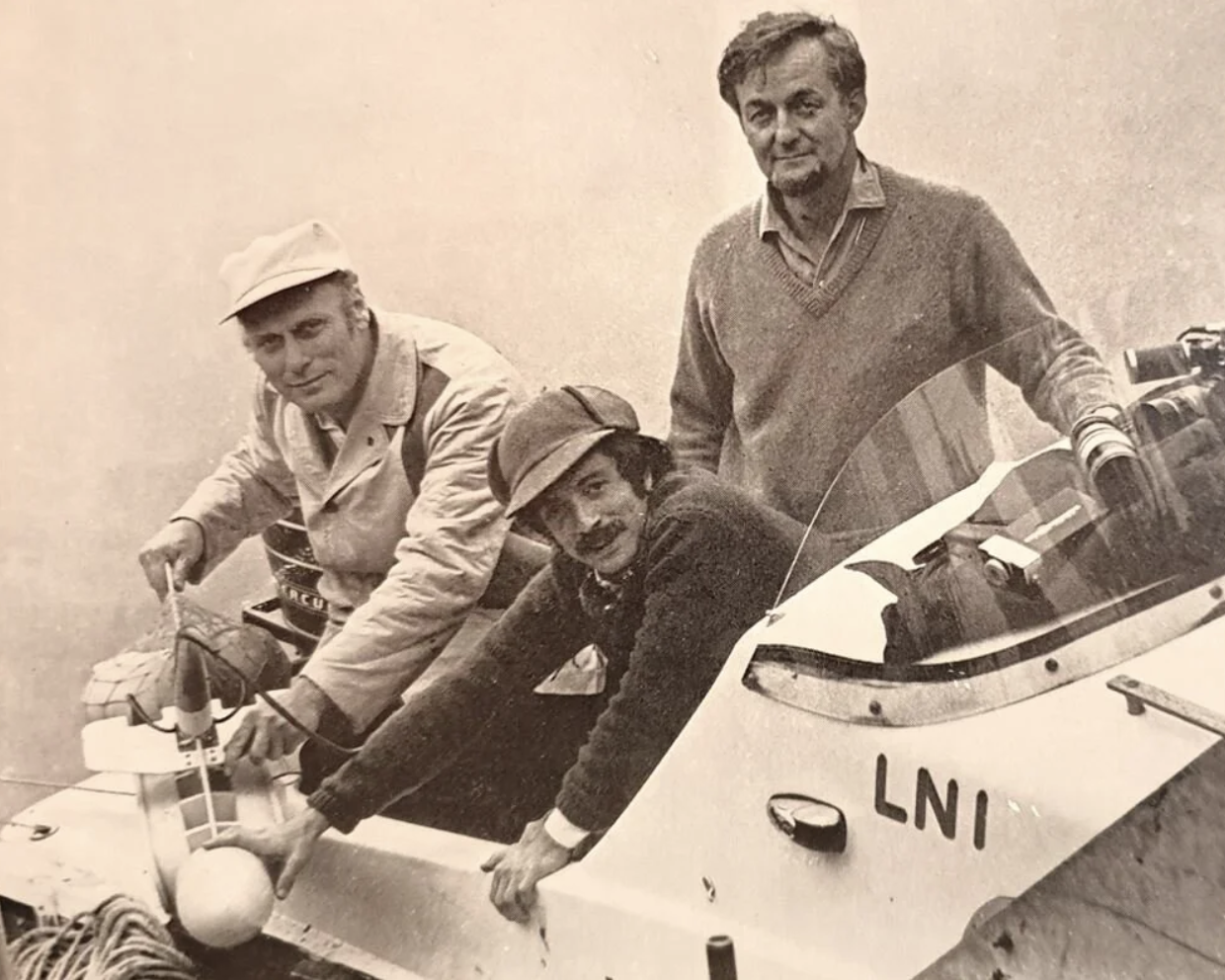
The house most often linked to Rines is Tychat, an estate on Urquhart Bay with a window over the water. Boston Magazine says he stayed there from the 1970s and owned it from the mid-1990s. His 1972 telegram to Edgerton asked him to come through Drumnadrochit, so he was based in that village's orbit from the start. I have found no source that says where he slept in the summers of 1971 and 1972, and none that says he lodged with the Carys. That gap is worth closing from Witchell, Harmsworth's Loch Ness, Nessie and Me, or Dick Raynor directly.
What is documented is the company he kept.
Winifred and Basil Cary. They lived for decades at Strone, on the hill above Urquhart Castle. Basil was a retired RAF wing commander. Winifred, born in 1906, had fished the loch as a child and eventually listed 15 or more sightings of her own, the first from about 1918 (Watson 2020). She believed in psychic phenomena and dowsed with a pendulum over maps, concluding at one point that the loch held 16 animals.
The Cary house was a salon for monster hunters long before Rines. LNIB crews camped in the grounds from 1964. Dinsdale called her "Freddie". Ted Holiday drank there. David Cooke taped her sightings for his 1969 book. Rines and Carol took tea there, and it was Basil who called the party out to see the hump.
Harmsworth later reported that Winifred herself said the hump she saw with Rines could have been anything. She still entered it on her map of sightings.
Tim Dinsdale. By 1972 he had spent twelve years at the loch on the strength of his own film. He was the senior British figure, a friend of the Carys, and the man who brought Peter Scott into the subject. Rines and his colleagues were on good terms with him and helped arrange a US lecture tour (Naish 2019).
Roy Mackal and the LNIB. Mackal recruited him. The Bureau's volunteers, based at Achnahannet, had been watching for a decade and were close to disbanding. The Academy's money and equipment were, for them, the last good chance.
Edgerton was the exception. He stayed in Massachusetts in 1972, and by 1986 was writing privately that many factors pointed to there being no animal (MIT Technology Review 2007). The one detached expert in the group was the one who was not there.
So in the weeks around the flipper night Rines was working among people who took the animal as settled, several of whom also took dowsing and psychic impressions seriously. He let one of them choose the camera station and tell the boats when the animals had arrived.
The Dinsdale parallel
The comparison with Dinsdale in 1960 is closer than it first looks.
Dinsdale came to the loch after reading a magazine article and then, by his own account in Loch Ness Monster (1961), working through the sighting reports in Constance Whyte's book to build a model of the animal. He arrived with a clay monster already made. On his first day he took a floating tree trunk for the creature. He spent time with Alex Campbell, the Fort Augustus water bailiff who had written the first press report in 1933 and claimed many sightings of his own. Shortly afterwards he filmed a hump crossing the loch off Foyers (Naish 2019).
The current majority reading, following Shine's and Raynor's work, is that the film shows a boat in poor light. Bauer disputes this and says the hump submerges. If the boat reading is right, Dinsdale was an honest observer whose expectations had been set by a book and a local authority before he looked through the viewfinder.
Set Rines beside that.
- Book that started it: Dinsdale, Whyte, More Than a Legend. Rines, Whyte, More Than a Legend.
- Local authority: Dinsdale, Alex Campbell, water bailiff, Fort Augustus. Rines, Winifred Cary, resident, Strone.
- Authority's standing: Dinsdale, Many claimed sightings; origin of the 1933 story. Rines, 15 or more claimed sightings; dowser.
- Priming just before the event: Dinsdale, Time with Campbell days before filming. Rines, Own sighting at the Cary house; dowsed report of two animals on the night.
- The record: Dinsdale, Distant moving object on 16mm film. Rines, Faint shapes on 16mm film, sonar chart.
- Mundane reading: Dinsdale, Motor boat. Rines, Loch bed and boat wakes.
- Step from record to monster: Dinsdale, Interpretation at the time of filming. Rines, Interpretation of chart, then alteration of prints.
The same book stands at the head of both columns, and Rines read it in Campbell's own village. In both cases a long-resident witness with a large personal tally vouched for the animal to a newcomer with technical training and no field experience of the loch. In both cases the newcomer then obtained an ambiguous record within days or weeks and read it the way he had been led to expect.
There are two differences, and they point in opposite directions. Rines had instruments, which should have protected him; but the instruments were positioned and read by people who had been told the animals were present. And Dinsdale's film was never altered. He showed what the camera took. The flipper pictures had a second stage that Dinsdale's film did not, and expectation alone does not put a clean edge on a print. Someone's hand did that.
Influence can explain why Rines saw a flipper in the raw frame and why he accepted an improved version without asking hard questions. It cannot explain who improved it.
Did the photographs keep the search going, and did they strengthen belief?
Yes on both counts, but mainly among people already committed, and at a cost. The pictures recruited the expertise and money that sustained the search through the 1970s. They also led directly to the claims that turned professional zoologists against the subject.
At the time, 1972 to 1976
The first reaction was muted. Witchell recorded that the November 1972 release got surprisingly little press coverage, and Frank Searle put out surface photographs of his own within days (Watson 2022). The effect on the public came later, through books and the 1975 publicity.
The timing mattered to the investigators. The LNIB's ten-year surface watch was ending in 1972 with nothing conclusive. Adrian Shine later described it as a war of attrition against the law of averages (Shine 1976). The flipper frames arrived at exactly the moment the British effort ran out, and they pointed to a different method: go underwater, with instruments. The search did not stop in 1972. It changed hands, from the Bureau to the Academy.
They brought Edgerton in. He had declined to come in 1972. After seeing the pictures he joined within two years, and wrote to Rines that he was very interested in whether the animals were drawn to the camera lights (MIT Technology Review 2007). Wyckoff followed. Without the 1972 frames there is no sonar-triggered rig in 1975.
They brought Peter Scott to a public position. Scott had been a quiet supporter since the early 1960s. The flipper gave him anatomy to work with. He drew reconstructions, painted the two plesiosaur-like animals that became the standard image, and co-signed the Nature paper.
Dinsdale treated them as confirmation. His 1973 article in The Photographic Journal argued for the "Rines/Edgerton picture" as a landmark. For a man whose own film was then thirteen years old with nothing to follow it, the pictures were a second leg to stand on.
Museum zoologists were briefly open. A meeting at the British Museum (Natural History) accepted the photographs as authentic records while declining to say what they showed. Zug at the Smithsonian and Lyman at the New England Aquarium were willing to describe a flipper on a body (Naish 2020).
They produced the events of 1975 and 1976. The Academy returned with better equipment and obtained the "body" and "head" frames. Rines rang Witchell to say the search was over. A symposium was planned in Edinburgh, cancelled under press pressure, and replaced by a presentation at the House of Commons arranged by David James MP (Watson 2017). The Nature paper followed, naming the animal so that it could be protected under recent conservation law. In 1976 the New York Times co-sponsored the Academy's expedition and ran a Loch Ness picture on its front page; the evidence was presented at Cornell; Technology Review gave it sixteen pages (Coleman 2012).
None of that sequence happens without the two frames from 1972. The name itself, rhombopteryx, "diamond fin", is a description of the retouched outline.
Later
Rines never stopped. He returned roughly twenty times over 35 years, the last in 2008 after a stroke. By then he thought the animals had died and was looking for remains. His own sighting was his stated reason, but the photographs were the evidence he showed to backers, crews and journalists throughout.
His colleagues largely held their positions. Klein said in 2012 that he had not changed his mind about his sonar results. Wyckoff was still at the loch with Rines for the 1997 NOVA film.
They recruited the men who exposed them. Tony Harmsworth, who founded the Loch Ness Monster Exhibition in Drumnadrochit, has said that Rikki Razdan and Alan Kielar spent heavily on their 1983 ISCAN sonar expedition because they believed in the images. They arrived as believers with a sonar array, found nothing over seven weeks, and only then went to Gillespie at JPL. The 1984 exposure was written by two people the photographs had persuaded to come.
They went into the exhibition. Harmsworth used the 1972 pictures and sonar chart as evidence in his own displays, and later described himself as "hurt and disappointed at being hoodwinked" (comment on Naish 2020, posted about 2023). For most of a decade, then, visitors to the loch were shown the flipper as fact by a man acting in good faith.
Harmsworth makes two further points in the same comment. Scott accepted the 1975 pictures because he was told they showed objects in mid-water; they were later shown to be debris on the loch bed, which he puts down to sloppy practice by Rines and his team, and he rates the linking of the 1972 frames to the sonar as worse. And he rejects the idea that the whole affair was obviously unreal from the start. There were good reasons why people were taken in, and it took the means to examine the facts before anyone could show why.
Believers still cite them. Angus Dinsdale's 2013 biography of his father lists the flipper picture with its sonar trace alongside the 1960 film as leading evidence. Bauer defended them in 2002 and 2016. Watson and Naish both describe meeting the image as children in the 1970s and taking it at face value.
The cost
The same pictures did the damage. The Nature naming drew two pages of hostile correspondence in January 1976: Corbet of the British Museum said the authors had not shown the object was even animate, and Halstead and colleagues pointed out that no known marine vertebrate has a fin of that shape (Nature 259). Scott's plesiosaur identification was, in NOVA's later judgement, too far-fetched for zoologists to take seriously (NOVA). Then came 1984. Technology Review dates the collapse of academic tolerance to the Discover and Skeptical Inquirer articles. By 1986 Edgerton was writing privately that many factors pointed to no animal.
So the flipper photographs did two things in sequence. From 1972 to about 1976 they were the main reason serious people with serious equipment kept looking, and the main reason the public picture of the animal hardened into a plesiosaur with diamond fins. From 1984 they were the main exhibit for the view that the whole inquiry had been careless. A picture that had been left as Gillespie printed it would probably have done neither.
Where this leaves the photographs
The points that are not in serious dispute:
- An Edgerton time-lapse camera hung under Nan in Urquhart Bay exposed faint shapes on a few frames early on 8 August 1972.
- A sonar on Narwhal recorded strong traces over the same half hour.
- JPL enhanced the frames, and JPL's results are not the pictures the world saw.
- The pictures the world saw left the Academy in that form.
The points still open:
- Whether the raw frames show a solid object in mid-water or the bed of the bay. The people who were on the boats are divided, with Raynor firmly for the bed.
- Whether the published image is a photographic composite, as Wyckoff said, or handwork, as Gillespie's prints and Shine's analysis indicate.
- Who did it, and what Rines was told.
Three things would settle most of this: the original transparencies, Wyckoff's working materials, and the Academy's correspondence with JPL from autumn 1972. Wyckoff's 1984 letter to Discover is said by Bauer to be online and is worth reading in full. Edgerton's papers at MIT include Loch Ness slides and letters and may hold more.
Until then the fair statement is that the flipper is a made image resting on a real but uninformative photograph, produced inside a group that already knew what it expected to find.
Related on Loch Ness Story
The flipper frames were taken in the same bay that dominates our sightings map: see why Urquhart Bay dominates the Loch Ness heatmap and explore the interactive sightings heatmap. Compare the other famous photographic case in the Surgeon's Photograph and Marmaduke Wetherell, read about Adrian Shine's research, browse the sightings register, or search contemporary reporting in the press archive.
Sources
Pages opened for this post:
Darren Naish, The 1972 Loch Ness Monster Flipper Photos, Tetrapod Zoology, 2020
Darren Naish, review of The Man Who Filmed Nessie, Tetrapod Zoology, 2019
Rikki Razdan and Alan Kielar, Sonar and Photographic Searches for the Loch Ness Monster: A Reassessment, Skeptical Inquirer 9, 1984
Roland Watson, The Monster Sightings of Winifred Cary, 2020
Roland Watson, Charles Wyckoff on the Loch Ness Monster, 2021
Henry Bauer, essay review of A Monstrous Commotion, Journal of Scientific Exploration 30, 2016
The Scientist and the Monster, Boston Magazine, 2008
Larissa MacFarquhar, New Yorker profile of Rines, 2000 (repost)
Seen as search extracts only:
The Nessie Quest, MIT Technology Review, 2007
Loren Coleman, Loch Ness Hero Robert Rines Dies, 2009
Science Frontiers no. 38 and no. 41, 1985
Henry Bauer, Common Knowledge About the Loch Ness Monster, 2002
Loch Ness Project, flipper note and archive timeline
Loch Ness Centre, Gargoyle Head
Museum of Hoaxes, The Flipper Photo
Added for the section on the search and belief (search extracts only): Scott and Rines, Naming the Loch Ness monster, Nature 258, 1975; correspondence, Nature 259, 1976; Watson, Those 1975 Underwater Photos, 2017, and The Most Amazing Pictures Ever Seen, 2022; Shine, Loch Morar Expedition Report, 1976; Coleman, Marty Klein, 2012; NOVA, The Legend of Loch Ness.